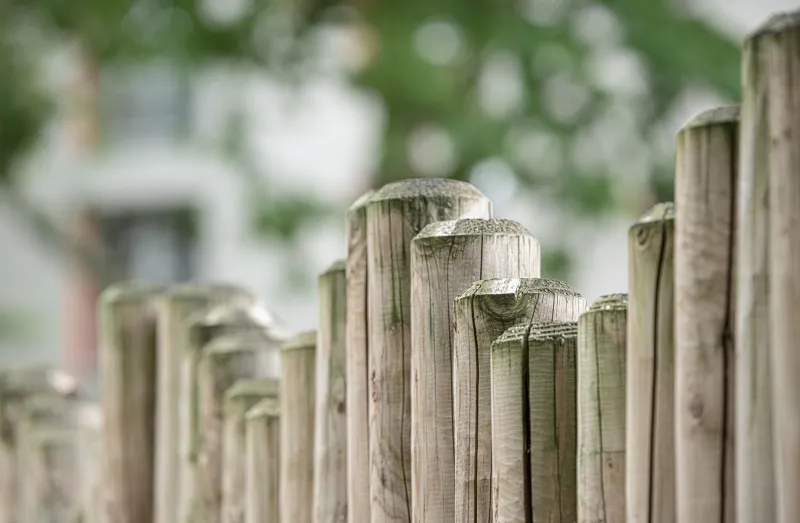
Beyond Charcoal: Why Warm Timber Is Winning British Gardens in 2026

For years, the British garden boundary has been dressed in charcoal. You can see it on new-build estates, on renovated terraces and on the pages of every outdoor-living brochure: dark grey panels, grey composite slats, grey gravel boards, grey everything. It has been tidy, modern and almost impossibly easy to specify. But walk around any garden show, landscaper's yard or well-kept suburban street in 2026 and something warmer is happening. Larch is back. Cedar is having a moment. Honey-toned timber is creeping back into boundaries that had been quietly greywashed into submission.
This is not nostalgia for some imagined cottage garden. It is a design correction. Grey gave us a useful, low-maintenance default, but it also made a lot of gardens look like they were waiting for a corporate brand launch. Warm timber does something different. It softens brick, settles against render and gives planting a background that feels alive rather than prescribed.
Grey had a very good run
Let us be fair to grey. Charcoal-stained fencing and grey composite have real practical virtues. They hide dirt, they read as contemporary, and they can make a small garden feel more architectural. If your house has crisp white render, anthracite windows and a minimalist patio, a dark grey boundary can look sharp and deliberate.
The problem is that grey became the answer to every question. On red brick, it can turn slightly cold and municipal. Against muddy winter planting, it can flatten the whole scene. And on a long boundary, a solid run of the same grey tone can feel less like a design choice and more like a default setting. In 2026, homeowners are starting to ask for boundaries that look chosen rather than specified.
What warm timber does to brick and render
Warm timber is generous. It flatters the materials we already have. On red brick, a honey-brown larch or a softly toned cedar picks up the warmth in the masonry without trying to match it. On white render, it adds depth and stops the garden feeling like a blank canvas. On older brick with soot-darkened edges, a lighter timber can lift the whole elevation.
The trick is not to go too orange. British gardens are full of muted greens, damp greys and soft browns, and a fence that is too fiery can look like it is competing with the planting. A gentle honey tone, a pale chestnut or a natural cedar usually sits more comfortably than a saturated orange-brown stain. If you are unsure, hold a sample against the house at different times of day. The same board can look golden at noon and almost brown by four o'clock in November.
The five-year weather test
Anyone choosing a boundary should think beyond the first photographs. Timber changes. That is part of its charm, but it is also the bit that catches people out.
Untreated larch and cedar will weather towards a silvery grey over roughly three to five years, depending on exposure, rain and sun. That can be beautiful, especially on a cottage-style garden or a coastal plot. But it is a different look from the fresh honey tone you see on day one. If you want to keep the warmth, you need to commit to an oil or stain regime. A quality UV-protective finish, refreshed every couple of years, will slow the shift and keep the colour more stable. A dark stain over cheap softwood is not the same thing; it can look flat and patchy as it wears.
Grey composite, meanwhile, tends to hold its colour more predictably, though it can collect dust, algae and pollen in damp British conditions. Charcoal-stained timber may need re-coating sooner than expected on south-facing boundaries, and any scuffs or scratches show up more than they do on natural timber. Neither option is maintenance-free. The real question is which kind of ageing you are happy to live with.
Choosing a tone for low winter light
British winter light is not generous. It is low, grey and often slightly blue, which is exactly why warm timber can be so effective. A honeyed boundary adds a little glow to a garden that might otherwise feel damp and dim. It also looks good with the plants that earn their keep in winter: hellebores, ferns, grasses, evergreen structure and the reddish stems of dogwood.
If your garden is north-facing, avoid very dark stains unless you want the boundary to disappear into shadow. A mid-tone natural timber or a pale warm brown will reflect more light and keep the space feeling open. If your garden is south-facing and baked in summer, a slightly deeper warm tone can hold its own without turning brassy. And if you have a lot of green planting, a soft cedar or larch background will make the greens look richer than a hard grey ever will.
Where grey still earns its place
This is not an argument for banning grey. Far from it. A modern extension with large glazing, dark window frames and a crisp patio often looks best with a restrained charcoal boundary. Grey also works well on coastal plots where silvered timber and weathered textures are part of the local language, and where a very warm stain can feel out of place against sea mist and shingle.
Grey composite can also be a sensible choice for a low-maintenance rental garden or a very exposed site where repainting timber is unrealistic. The point is not that warm timber is morally superior. It is that grey should be a decision, not a reflex.
A boundary with a pulse
The best boundaries in 2026 are not trying to look like a product catalogue. They are trying to look like they belong. Warm timber does that more easily than most materials because it responds to the house, the weather and the planting around it. It is not perfect, and it is not maintenance-free, but it has a pulse. After a decade of grey, that feels like a welcome change.