The Gate Is the Point: Designing the Smallest Boundary With the Most Character
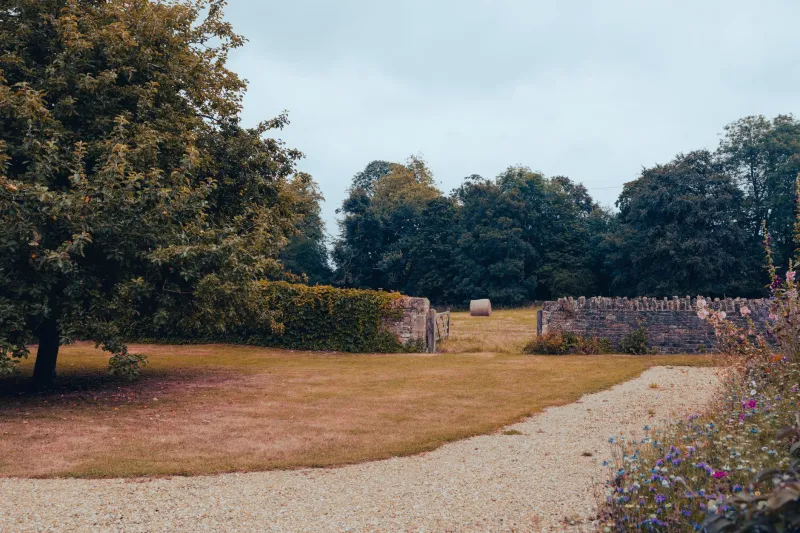
A fence does the heavy lifting, but the gate is where a boundary becomes personal. It is the bit you reach for, the bit visitors see first and the bit that tells you whether a garden has been designed or merely closed off. Get the gate right and the whole run of fencing feels intentional. Get it wrong and even good panels can look like a gap someone remembered to fill at the last minute.
Start with the walk, not the woodwork
Before you fall for a finish or a hinge, walk the route you actually use. Where do you approach from? Does the gate sit at the end of a path, around a corner, beside a shed or at the top of a step? The answer changes what the gate needs to do.
A gate at the end of a straight path is a focal point. It will be looked at head-on, so proportion matters: too narrow and it feels mean, too wide and it can sag or look flimsy. A gate tucked around a corner can be quieter, perhaps matching the fence so it almost disappears. A gate beside a seating area may need more privacy, while one facing the street may need to look smart from both sides.
Think about sightlines, too. A solid gate blocks the view into the garden, but it also blocks the view out. If you like to see who is at the door, a slatted or partly open design may suit better. If the gate is overlooked by a neighbour's upstairs window, a taller, tighter design may be the kinder choice. The gate is small, but it is a decision point.
Privacy is a negotiation, not a gadget
Gates are often sold as privacy solutions, but a gate only works with the fence around it. A tall, solid gate dropped into a low boundary looks odd and can feel unfriendly. A low gate in a tall screen can leave a gap at exactly the height people look through.
One practical approach is to treat the gate as part of the same rhythm. If the fence uses horizontal slats, carry that rhythm through the gate, even if the gate is slightly taller or has a different frame. If the fence is closeboard, a matching gate with a neat top rail feels resolved. If you want contrast, make it deliberate: a dark metal gate in a timber run can look sharp, but it needs to feel chosen rather than leftover.
For privacy, pay attention to gaps. A slatted gate with wide spacing may look lovely and still reveal more than you expect, especially when the sun is low. A backing rail or a tighter spacing can help without turning the gate into a slab. And remember the sides: a gate that meets a hedge, wall or post needs to close cleanly, not leave a finger-width slit that becomes a wind tunnel for eyes.
Swing, space and the small print
This is where many good-looking gates come unstuck. A gate needs clearance to swing, and that clearance has to be designed in. Which side are the hinges on? Where does the latch fall? Does the gate open inwards or outwards? Is there a slope, a step or a change in level?
On a slope, a gate that swings freely at the top may catch the ground at the bottom. The usual fix is to hang it slightly clear of the ground and use a suitable drop bolt or latch, but the post positions need to allow for it. On a narrow path, an inward-opening gate can eat the space you need for bins or bikes. On a busy route, an outward-opening gate can be a hazard.
Also think about who uses it. A standard pedestrian gate is fine for most gardens, but if you wheel a barrow through, store bikes, or have family members who need step-free access, a slightly wider opening and a flush threshold make a real difference. A self-closing hinge can be handy, but it must not fight the latch or swing shut on a child. Good hardware should make the gate feel lighter than it is, not like a gym workout.
Timber, metal and the honest match
Timber is the natural choice for many British gardens because it weathers into the landscape rather than sitting on top of it. A timber gate can match the fence exactly, which is calm and classic, or it can be a slightly richer version of it, with a different top rail or a decorative brace. If you are using a softwood gate, check how it is treated and how it will age. Some finishes look warm and golden for a season, then fade; others go silver-grey. Neither is wrong, but you should know which one you are buying.
Metal gates bring a different quality. A slim steel or aluminium frame can feel elegant and secure without blocking light, and it can be powder-coated to suit a dark fence or a pale wall. Metal and timber can work beautifully together: a timber infill in a metal frame gives privacy with a cleaner edge. Slatted designs are popular for good reason, but they need a sturdy frame, because slender slats can rack out of shape if the gate is wide and the hinges are cheap.
Composite gates are worth considering where damp is a persistent issue, but they are not automatically maintenance-free. Check the warranty, the colour fastness and how the gate is reinforced. Whatever the material, look at both faces. A gate is seen from the garden and from the approach, and a beautiful front can hide a scruffy back.
Hardware that can take a British winter
A gate is only as good as the bits that hold it. In the UK, wind-driven rain, frost and occasional gales will find every weak point. Use galvanised or stainless fixings, especially near the coast, and avoid mixing metals where corrosion can take hold. Hinges should be substantial enough for the weight and width of the gate, and the posts should be set deep enough to resist leverage. A gate is a sail when the wind gets behind it.
Latches matter more than people think. A simple thumb latch is charming but can rattle; a ring latch is traditional and easy to use; a magnetic or roller catch can feel smooth and modern. Whatever you choose, make sure it can be operated from both sides where needed, and that it lines up after the gate has settled. Add a gate stop so the gate does not swing back and stress the hinges. Cap the posts to shed water, and check drainage around the base so the posts are not standing in a puddle.
The mistakes that give the game away
Most gate problems are not about style. They are about sequence. The gate is chosen after the posts are set, the path is laid and the fence is fixed, so the opening is whatever is left. That is how you end up with a gate that is too narrow for the wheelbarrow, a latch that sits at the wrong height, or a swing that collides with a downpipe.
Other common slips include hanging a heavy gate on lightweight posts, ignoring the prevailing wind, and overcomplicating the design with too many braces, finials and colours. A gate should feel like one clear idea. It also needs testing before the installer leaves: open it, close it, latch it, check the clearance, and do it again in the rain if you can. The garden gate may be the smallest boundary, but it is the one you will use every day. Give it the biggest thought and the whole fence will feel the benefit.