The Narrow Passage Problem: Why That Strip Beside the House Deserves a Plan
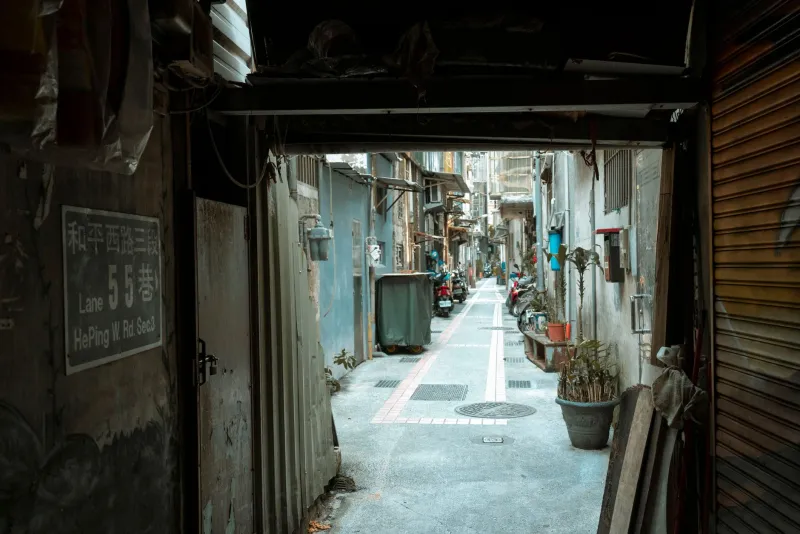
Most British gardens have one: the narrow passage down the side of the house. It is the route to the back garden, the place where the wheelie bins live, and the spot where the boiler flue, outside tap and electricity meter all compete for attention. Because it is awkward, it often gets whatever fencing is left over and a bit of gravel. That is a shame. A side return is still a boundary, and it is often the first proper boundary visitors see. Treat it as a corridor with a purpose and it stops feeling like leftover space.
Start with what the passage has to do
Before choosing a screen or a gate, spend ten minutes walking the route as if you were using it in real life. Can you get a bin out without scraping your knuckles? Is there room to carry a bike through? Does the gate need to open inwards or outwards? Where are the drains, meters, flues and downpipes? A narrow passage is a service route first, so practicality has to come before pretty planting.
If bins are the main traffic, avoid loose gravel and narrow stepping stones. A smooth, level surface is kinder to wheels and easier to sweep. If bikes are the issue, measure the handlebars and allow a little more space than you think. A storage solution that technically fits but is miserable to use will soon be abandoned.
Decide what the strip is for
Side returns tend to fall into three camps. Some are pure service corridors: bins, recycling, access to the back. Some are private cut-throughs that you want to feel secure and enclosed. Others are small garden rooms in waiting — a sheltered spot for a bench, a pot collection or a quiet cup of tea. Each brief leads to a different boundary.
For a service corridor, durability matters more than decoration. Choose a fence that can take the odd knock, keep the gate wide enough, and use screening to hide the ugly bits rather than to block the route. For a private cut-through, a solid gate and a fence that closes off overlooking will do more than any amount of clever planting. For a garden-room feel, light is the limiting factor. Narrow passages are usually shady, so slatted screens, pale timber and a carefully placed mirror or light can stop the space feeling like a tunnel.
Fence, wall or screen?
A solid fence gives privacy, but it also steals light. In a passage that is already dark, a slatted screen or a hit-and-miss design can feel much better, because air and daylight can pass through. The trade-off is obvious: the more gaps, the less privacy. If the passage is overlooked from a neighbouring window, a solid lower section with a slatted top can be a sensible compromise.
Check where the boundary actually sits before you build anything. Fence ownership is not always obvious, and a quiet conversation with the neighbour is cheaper than a dispute. In England and Wales, fences next to a highway are generally limited to one metre without permission, and other garden boundaries are usually limited to two metres, but local rules and conservation areas can differ. If you are unsure, check with the local planning authority rather than guessing.
Keep timber away from a damp house wall. A small gap for airflow, a gravel board at the base and posts that are independent of the building will all help the fence last. If the passage is very tight, a wall-mounted trellis or wire system can add greenery without eating into the walkway.
The gate is the hinge of the whole idea
A side gate is looked at far more often than people expect. It is also a security decision. A flimsy gate beside a solid fence looks like an invitation, so match the gate to the fence in both style and strength. Make sure the latch is easy to use with cold hands, and think about whether you want it to self-close.
If the front garden has a recognisable style — charcoal slats, warm timber, a particular gate colour — repeat it here. The side passage is a transition, so a little continuity helps the house feel considered from front to back. You do not need to copy everything, but matching the timber tone or gate style is an easy win.
Make storage part of the design
Bin stores and bike racks are usually bolted on afterwards, which is why they look like it. If you are redoing the boundary, design the storage in at the same time. A slatted bin store that matches the fence can hide three bins and still let air through. A simple bike rack against a solid panel keeps frames off the ground and stops the passage becoming a obstacle course.
Do not block meters, flues or ventilation. If you need access, use removable panels or a gate within the screen rather than a fixed box you have to dismantle. And keep the bin lids clear: a beautiful store that requires a wrestling match every collection day will not stay beautiful for long.
Planting for a shady strip
Most side returns are shade factories, so choose plants that do not mind. Ferns, sarcococca, hostas and shade-tolerant climbers will do better than sun-loving lavender. Climbers need wires or a trellis, not a fence post to cling to, and keep them away from gutters and flues. Pots are useful because you can move them when the bins need to come through.
A little lighting changes the passage after dark. A warm, low-glare wall light or a couple of step lights makes the route safer without turning it into a runway. Keep it on a sensor or a timer so it does not annoy the neighbours.
The point is intention
A side return does not need to be a garden. It needs to feel deliberate. Get the access right, choose a boundary that suits the light, hide the awkward utilities and repeat one or two details from the front garden. Do that, and the narrow strip stops being the bit you apologise for and becomes the bit that quietly works.