Low Stakes, High Impact: Rethinking the Front Garden Fence
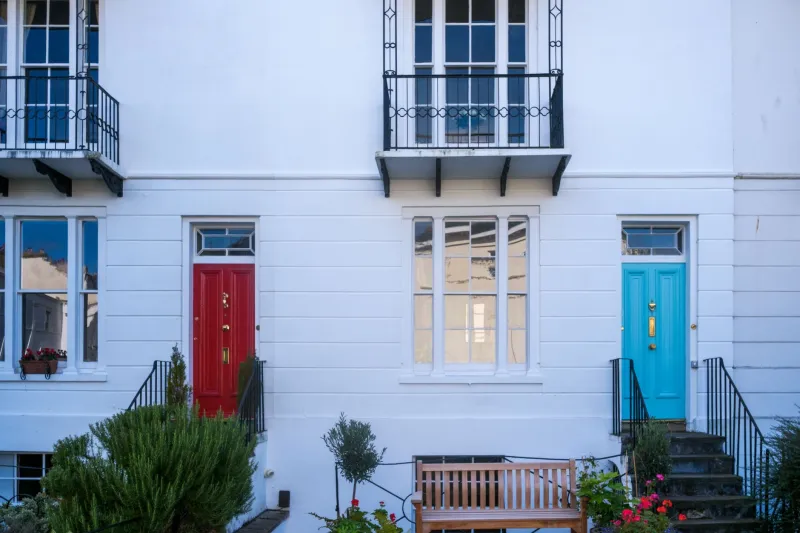
Front gardens have had a rough few decades. We paved them for parking, hid them behind bins, and treated the boundary as something to be solved with a wheelie-bin screen and a bit of gravel. But there is a quieter shift happening. Homeowners are starting to see the front garden as a proper outdoor room — one that faces the street, yes, but can still be useful, private and rather nice to come home to.
The front garden fence is part of that shift. Not the six-foot fortress, and not the bleak closeboard panel that turns a terraced street into a tunnel. I mean the low boundary: railings, picket, a low slatted screen, a mixed hedge, a brick plinth with something lighter on top. These boundaries don’t shout ‘keep out’. They say ‘this is cared for’.
The trouble with the fortress look
A tall solid fence at the front of a house is usually a mistake. It blocks light, hides the façade, creates a dark slot where bins go to fester and makes the street feel guarded. It can also look strangely aggressive next to neighbouring gardens that are open to the pavement.
Security is not simply a matter of height. A space that is overlooked, tidy and clearly cared for tends to feel safer than one hidden behind a solid panel. Low boundaries create a gentle threshold — private enough to stop people wandering in, open enough to keep an eye on the street. That is a better trade-off than a front garden that looks like a compound.
Sightlines come first
Before you fall for a design, stand at the pavement and look at your house properly. Can you see the path? Can you see the driveway? Can a delivery driver find the door? Can pedestrians and cyclists see you pulling out?
Sightlines matter most near driveways, junctions and corner plots. A low fence or hedge may be fine in the middle of a run, but keep visibility generous where cars and people meet. Don’t let piers, gate posts or a thick hedge swallow the view at the exact point where you need it.
The same goes for the house itself. A front boundary should frame the façade, not hide it. If the fence is the first thing you notice and the house is an afterthought, the proportions are probably wrong.
The planning bits to check
In England, permitted development generally allows fences and walls up to about 1m high next to a highway, and up to 2m elsewhere. But that is the simplified version. Conservation areas, Article 4 directions, listed buildings, flats and some new-build estates can change the picture entirely. Covenants and management company rules may be stricter than planning law.
If you want a taller front boundary, or you live in a sensitive area, check with the local planning authority before ordering materials. In Wales and Scotland, the rules are different again. This is not the exciting part of the project, but it is the part that stops you becoming the cautionary tale at the residents’ meeting.
Also think about access. If the boundary includes a gate, will the postie, courier, meter reader and bin crew still be able to do their jobs? A gate that is locked all day may be fine for privacy, but it can cause daily friction if it hides the letterbox or blocks the route to the bins.
Bins, bikes and the death of the front lawn
A front boundary earns its keep when it solves a practical problem. A low slatted screen can hide wheelie bins without creating a solid wall. A simple bike rack behind a gate keeps cycles out of the hallway. A slim store with a green roof can turn an eyesore into a feature.
The trick is to design storage into the boundary rather than dumping it behind it. Keep bin access sensible for collection day. Make sure handles, lids and wheels can move without a wrestling match. If you are hiding bikes, leave enough depth for the handlebars — a detail that is easy to forget until the first scratch appears on the gate.
Letterbox access is another small thing that becomes annoying fast. If your front door is set back, make sure the path is obvious and the house number is visible from the street. A beautiful fence that makes your home hard to find is not doing its job.
Materials with manners
Metal railings are having a moment for good reason: they are slim, secure enough for most front gardens and let light and views pass through. Picket fencing remains charming on older cottages and terraces, though it needs more maintenance than people expect. A low brick plinth with railings above gives a sense of permanence without closing the street off. Mixed native hedging is slower but softer, and it is hard to beat for wildlife.
Low slatted screens can work on contemporary homes, but keep them genuinely low at the front. A slatted panel that creeps up to head height starts to feel like a fence pretending not to be one. Whatever you choose, match the house rather than the catalogue. A delicate Victorian terrace rarely wants a chunky horizontal slat screen, and a new-build often looks better with clean lines than with ornate scrollwork.
Kerb appeal is a proportion game
A good front boundary makes the house look more settled. It gives the eye a line to follow, defines the path and adds a bit of greenery. It should also leave room for planting. Even a narrow border of lavender, ferns or clipped box can soften the hardest fence line.
Symmetry helps, but it is not compulsory. Align the gate with the path, keep the height consistent and make sure the materials relate to the house. A house number that is easy to read, a light that actually lights the path and a boundary that does not block the window are all small wins that add up.
The front garden fence is back, but it does not need to be a barricade. Done well, it is a piece of street manners: a low, thoughtful edge that gives you a bit of privacy, a place for the bins and a better view from the pavement. The street can still say hello.