What You Don’t See: The Fence Foundations That Buy You Fifteen Years
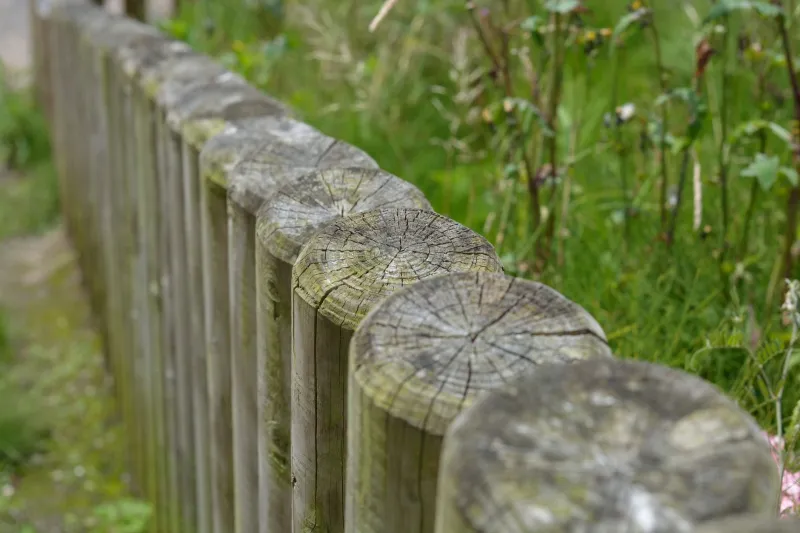
Most fences are chosen from the front. You pick a panel style, a height, maybe a colour, and that is the bit you picture. The parts that decide whether that fence is still standing straight in 2041 are mostly underground or hidden behind a board. In a British garden, with wet winters, clay soil and gusty spring winds, those details are not boring extras. They are the difference between a boundary that settles in and one that starts leaning by year five.
None of this has to be ugly. A designer’s eye should run all the way to the base of the fence. Get the hidden details right and the finished boundary looks more deliberate, more solid and easier to maintain.
The bits nobody photographs
Four things do most of the quiet work: the gravel board at the bottom of the panel, the plinth or base under the posts, the footing that holds each post in the ground, and the drainage that decides where rainwater goes. They are rarely the reason someone buys a fence, but they are often the reason a fence fails.
A useful way to think about them is as a small supporting cast. The panel is the face. The gravel board is the sacrificial hem. The post and its footing are the bones. Drainage is the bit that stops the bones sitting in a puddle.
Gravel boards: sacrificial, not decorative
A gravel board is the horizontal board that sits at the base of a fence panel, just above ground level. Its job is to keep the bottom of the panel out of the wet and to take the splashback from rain hitting the ground. It also hides the concrete or post footings, which is why it has a visual job as well as a practical one.
Timber gravel boards are the traditional choice. They are cheap, easy to replace and can be colour-matched to the fence. The catch is that they are the first part to rot, especially if soil, leaves or mulch are piled against them. Concrete gravel boards last far longer and are excellent in wet gardens, but they can look heavy under a delicate timber panel. Composite boards sit in between on cost and give a neat, consistent line.
Whichever you choose, keep the bottom of the panel above the ground and leave a small gap for air. Do not bury a timber panel in soil and call it a gravel board. On a slope, step the boards rather than letting them follow the ground into a puddle.
Concrete plinths and the damp problem
A plinth is a raised base under the fence — often concrete, sometimes brick or block — that lifts the timber clear of wet ground. In gardens that sit low, drain badly or have heavy clay, a plinth can add years to the life of the fence. It also gives the boundary a more substantial, architectural look, a bit like a skirting board for the garden.
The important word is raised. A plinth should not create a dam. Water needs to run away from the fence, not sit against it. If the ground is already wet, the plinth needs to work with drainage, not against it. In some gardens a simple concrete kerb is enough; in others a low wall makes more sense. It is worth asking what happens to rainwater before the concrete goes down.
Post mix, footings and the wind test
A fence post is a sail with a small buried anchor. The anchor needs depth, width and a solid grip on the soil. As a rough guide, a 1.8m fence post should have at least 600mm in the ground, set in a hole wide enough for a proper collar of post mix or concrete. Sandy or loose soils may need more. Clay can hold water, so a gravel base at the bottom of the hole helps.
Post mix is convenient and strong when used properly. It is not a substitute for digging a decent hole. The post should sit on a small bed of gravel or hardcore, not directly in a puddle of wet concrete, and the concrete collar should slope away from the post at the top. That last detail is tiny and makes a real difference to how long the post lasts.
If the fence is on an exposed ridge, a coastal plot or a boundary that funnels wind, say so. The specification may need to change. Wind is usually what finishes off a fence that was installed with shallow holes and hope.
Drainage: where the water actually goes
Water is the quiet enemy. It rots timber, softens ground and lifts posts in a frost. A good fence detail keeps the bottom of the timber ventilated and lets water move away. That means soil below the gravel board, not above it; a slope away from the posts; and no beds or paving that trap water against the base.
If the fence sits on a retaining wall or at the bottom of a slope, get advice. That is no longer just a fencing job. A boundary that is holding back soil needs proper drainage and, in some cases, an engineer’s eye. It is much cheaper to ask before installation than to rebuild afterwards.
How hidden details change the finished look
This is where practical choices become design choices. A chunky concrete gravel board under a light, warm timber panel will make the fence look heavier and more grounded. A matching timber or composite board will make it look lighter and more continuous. A low plinth can make a short fence feel more substantial without adding height. A stepped base on a slope can turn an awkward drop into a neat detail.
The trick is consistency. Pick the base detail at the same time as the panel, not as an afterthought. Look at the fence from the house, from the patio and from the neighbour’s side if you can. The line at the bottom is the one you will see every day.
A sensible spec conversation
When you get a quote, ask what is going under the panel. How deep are the post holes? What are they filled with? What is the gravel board made of? How does water drain away from the base? What guarantee covers the posts and the boards? A good installer will answer without flinching.
A fence can last fifteen years or more, but not by accident. It lasts because the invisible bits were specified properly, installed with a bit of care and given a quick check each year. The pretty part is the panel. The long life is in the base.